Branding and Trademark Search

I was helping a client last month decide on a brand name for an athletic apparel company.  I took the various concepts and elements they wanted to portray and came up with several candidates.  To do this I did a psychographic analysis of what they want their brand to portray compared to that of their competitors.  This is one below is one I did for a swim wear client:

psychographic

After they chose a name walked them through the trademark search process.  To do this:

  1. Go to uspto.gov
  2. Go to the Trademarks tab on the upper left corner
  3. Go to Trademark Electronic Search System (TESS) on the left
  4. If your brand is just a name (and not a unique logo) then go to ‘Basic Word Mark Search’.  If it is a name and/or logo then go to either of the ‘Word and/or Design Mark Search’ options
  5. Type in your brand name.  You can adjust the search settings such as ‘Plural’, ‘Live/Dead’ etc. as you become more familiar with trademarks
  6. You’ll get a list of trademarks that are the same or similar.
  7. If it’s available and/or the closest other trademark is fairly dissimilar and/or in a different industry, you’re probably in luck!

There are a BUNCH of details regarding trademarks within the realm of intellectual property so I can send you some pertinent info.

Happy filing!

Pricing strategy

Pricing strategy is a key element of sales.  How much?  It can make or break a deal.  It is used from branding (i.e., “prestige pricing”) to selling soon-to-be discontinued product lines (i.e., false urgency).

So how do you price your product/service?  There’s cost pricing, which just covers your costs and expenses and maybe leaves a little margin.  Then there’s prestige pricing, which sets the price very high so the customer can feel special for paying so much.  There are many other strategies too.

For example, if you want to sell a $25,000 car, you sell it next to a $40,000 car.  Suddenly, $25k doesn’t seem as expensive.  This is an example of Anchoring.  Anchoring is the human tendency to rely too heavily on the first piece of information (i.e., the “anchor”) offered when making a decision.

This great article from Blue Perks discussed many more pricing strategies you should and shouldn’t use.

Contact us today to nail down your pricing strategy!

← Back

Thank you for your response. ✨

There are certainly worse times, but we rarely realize it when we are in a good time.

Contact us today to make someday, now.

← Back

Thank you for your response. ✨

Business Plan Client – 9 Bar Roasting

9 Bar Roasting approached me almost a year ago for a business plan.  They are a boutique coffee roasting company that serves restaurants, offers La Cimbali and Casadio equipment sales, and provides barista training, in addition to serving delicious coffee in their Northridge store.  Check them out if you ever get a chance.

www.9barroasting.com

coffee bag
machine


Contact us today to get started on your coffee shop business plan!

← Back

Thank you for your response. ✨

The psychology of sales

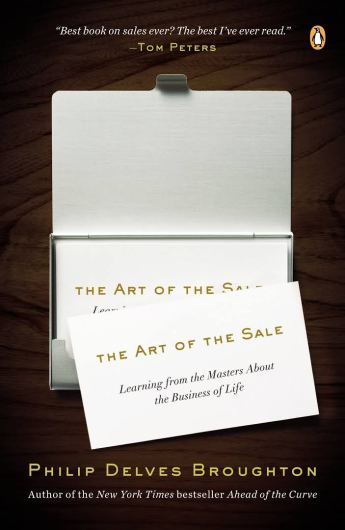
Sales is a lot about psychology.  In the book The Art of the Sale, former foreign correspondent for London’s The Daily Telegraph and Harvard MBA Philip Delves Broughton discusses how a merchant in Tangier, Morocco has sold to the likes of Yves Saint Laurent.

images

Abdel Majid Rais El Fenni is a salesman of fine objects and furnishings deep in the heart of the Medina (old town) of Tangiers. His customers range from the suspicious and clumsy cruise passengers who sweep through the city on the lookout for the quick and the cheap, to interior designers and antique dealers from around the world looking for treasures for their clients, to the rich and famous themselves — Elizabeth Taylor was a customer — who trek to Majid’s store to shop.

One of the many reasons of his success is his ability to read the customer.  He understands that sales opportunities develop quickly and that sales strategies must be readily tailored to meet the needs of his customers, and that he must quickly uncover his customers’ true desires.  Not all customers just want a bargain.  Some want a piece with a fascinating history.  Some want to show off in front of their friend how good they are at finding the “best.”

This falls in line with what my international marketing professor always said, marketing isn’t about fact, it’s about perception.

Sales is an intricate art that takes a lifetime to master but is simply put, the most important aspect of business.

If you get a chance, pick up this amazing book.

Business terms

A couple weeks ago I sent my business partner in one of my projects a list of indirect competitors.  He, a television producer without a business background, replied that they are not competitors.  That made me realize that the many terms used in business are very confusing and their subtleties are unclear.  So I put together a little glossary of some terms that are often misused/mistaken.

7658298768_7b0b2ce378_o

Direct competition vs. Indirect competition:  Direct competition is pretty clear but what about indirect competition?  For example Netflix’s direct competitor is Hulu.  They’re both streaming video platforms.  An indirect competitor can be the simple antenna TV or something that can be a technology that is still in R&D.  Over the air TV broadcast isn’t necessarily a streaming on-demand platform but it is a substitute video entertainment/content delivery system.  So a competitor can be something that is obvious or something that is not so conspicuous.

Industry vs. Market:  Industry is what your company is in.  It is your competitors, your supply chain, and related companies.  They are essentially the parties that sell to the market.  The market is your customers.  They are the buyers of your product or service.  When industry publications write “market size” they are talking about the amount of money that can be made from the customers.

Sector vs. Segment:  Sector is a subsection of an industry.  The “telecommunications industry” for example is made up of thousands of sectors; the router sector, the ground wire/cable sector, the GPS tech sector, etc.  Industry term is only as broad as the scale of your analysis.  If you are analyzing just the GPS sector, then you can say “GPS industry” and then breakdown the relevant sectors within that industry.  Segment is a subsection of a market.  A segment of the “millennial market” is tween girls, etc. (when a segment is referencing a group of people, then it can also be called demographic).  A segment of the “restaurant market” is Mediterranean restaurants.

Revenue vs. Profit (income):  Revenue is the money that is coming in before costs, expenses, taxes, depreciation, etc. are taken out.  Once those pesky things are taken out you have profit.  There is gross profit which is revenue – expenses, and and net profit which is revenue – expenses – taxes.  Then there is retained earnings, which is another step!

There are many many more (branding, PR, etc.) so if you are unsure, please feel free to ask!

Product/Service life cycle

One of the first in a business plan is determining where on the product/service life cycle curve the product sits.  It is always helpful in any Industry and Market Analysis to get a macro view of where the product/service is in its life cycle. 

What is the product/service life cycle?

It is the birth, growth, progression, and ultimate passing of any product/service.  For example, a CD came into the market around the early 90s.  This is the birth/introduction stage.  It gained popularity and was one of the most preferred data transfer methods until recently.  So for the next ten years, it was in the growth and in the early 2010s entered the maturity phase.  Now, it is in the decline phase.  Microsoft Office is installed online when purchasing a new laptop.  No more CDs.

Of course, not all products/services will die out.  They may die out eventually but will make one or two more resurgences.  Take, for example, baking soda (sodium bicarbonate).  The earliest use of naturally forming sodium bicarbonate was used by ancient Egyptians as a component of the paints they used in hieroglyphics.  Sodium bicarbonate was also used in the 1800s in commercial fishing to prevent freshly caught fish from spoiling.  Baking soda continues its long life cycle in many, many uses, including cleaning, cooking, neutralization of acids and bases, not to mention the elementary school volcano science experiment, and more.

Product/Service life cycle curve

Maybe there will be a new use for CDs that will revive the CD, but without major modification (which will essentially change the actual product and will actually create a new/different product), it will be unlikely.  Wherever your product/service is in its life cycle, with enough investigation, a new spin could be created to find a niche demand (market segment).

Launch and Grow Your Business

Contact us for help determining where your business offering is in the product/service life cycle.

Up ↑